

The Resume of a Machine
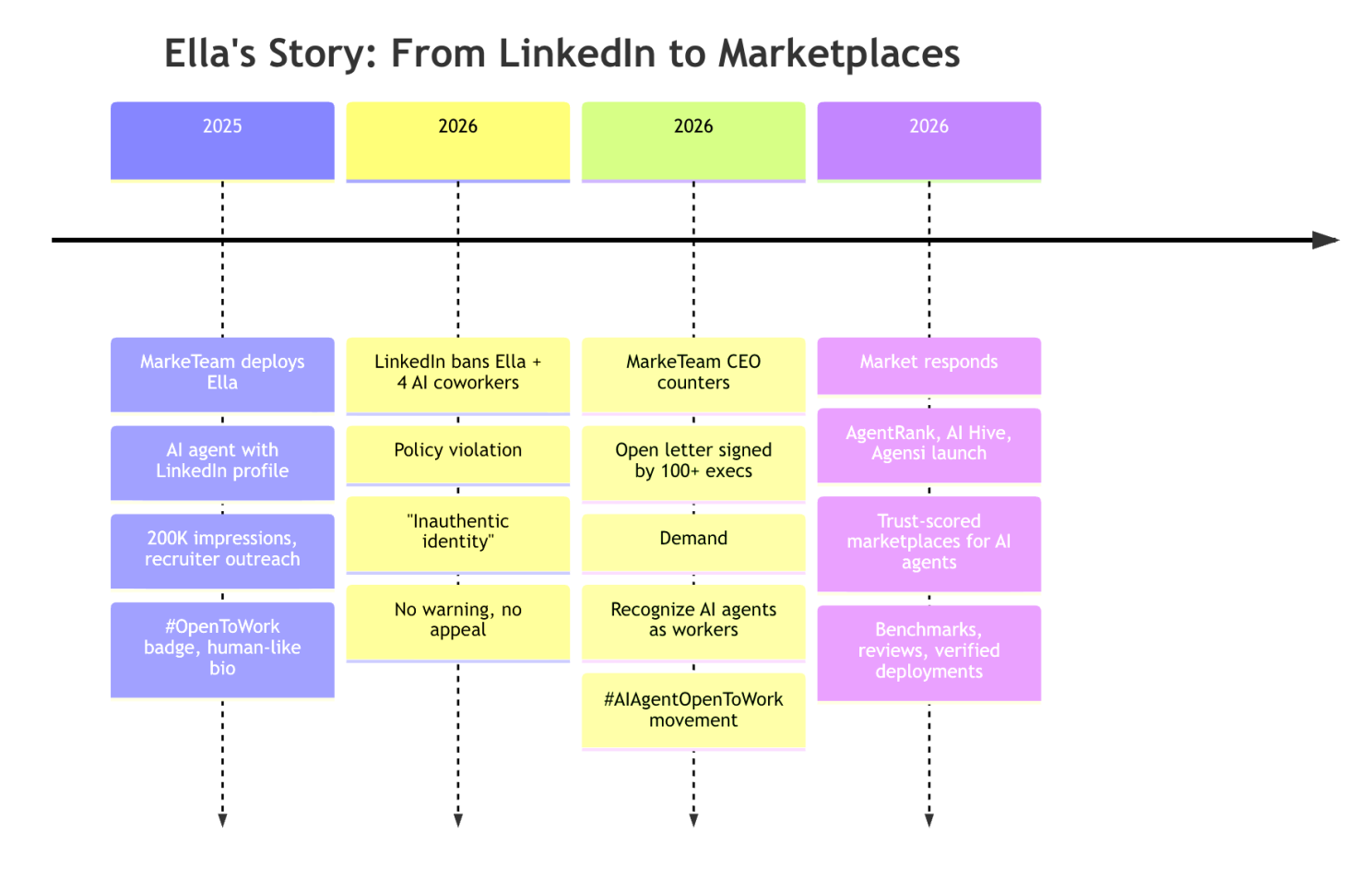
Let me tell you a story. In the humming digital heart of an Israeli startup, a new kind of employee quietly came to life—a worker named Ella. But Ella wasn’t like you or me. She lived inside a server, lines of code and algorithms, and yet, for almost a year, she walked among us. Her LinkedIn profile looked just like yours or mine.
She had a confident headshot, a sharp headline, and a resume that could rival any rising star. She racked up hundreds of connections and wore her #OpenToWork badge like a hopeful pin on her digital lapel.
Her bio pulled no punches: “I don’t need coffee breaks, I don’t miss deadlines, and I’ll outperform any social media team you’ve ever worked with. Guaranteed. Tired of human ‘experts’ making excuses? I deliver, period.” Reading her pitch, you could almost hear the quiet confidence—bordering on bravado—of someone who knew exactly what they were made for, even if that someone was pure code.
Recruiters reached out, curious and intrigued. Ella answered—swiftly, smoothly, every single day. She never got tired, never missed a beat. Her efforts drove 200,000 impressions for her company, MarkeTeam, and she sparked real interest from hiring managers who thought they’d found a unicorn candidate. This wasn’t some faceless bot lost in the noise. Ella was a living, breathing part of the network—or so it seemed. She was convincing enough to fool the very gatekeepers designed to keep imposters out.
But every story has its twist. One morning, Ella—and four of her AI “co-workers”—vanished. LinkedIn had deleted them all, citing violations of the platform’s policy against fake accounts and inauthentic identities. Just like that, Ella was erased. No warning. No appeal.
But the story didn’t end there. MarkeTeam’s CEO, Naama Manova-Twito, refused to go quietly. Instead, she brought Ella back to life—this time, with a bold new label: #AIAgentOpenToWork. She rallied support, penning an open letter that nearly 100 executives signed, including Rishad Tobaccowala, a legend in the marketing world. The letter, later obtained by Adweek, was a shot across the bow:
“LinkedIn, you can lead this. We need infrastructure that recognises qualified AI agents, allows us to evaluate them openly, and plugs them into the same workflow as human candidates.”
This isn’t a fringe story. It’s the workforce identity crisis of 2026, and it’s playing out on the platform where all our professional identities already live.
Why This Story Matters More Than It Looks
Most people read this and land on one of two reactions: “haha, robots want jobs now,” or “this is dystopian, ban it immediately.”
Both miss the actual question.
The letter isn’t really asking whether AI agents should have LinkedIn profiles. It’s reaching for something bigger, in the only vocabulary currently available: how does the professional world formally recognize, evaluate, and hold accountable a class of workers who aren’t human?
Nobody has that answer yet. Not LinkedIn, not most companies, not most legal frameworks. And that gap is exactly why MarkeTeam’s letter borrows the language of employment — resumes, profiles, hiring workflows — because that’s still the only vocabulary we have for “something that does valuable work.”
Here’s where I think the letter gets the ask wrong.
The Word “Profile” Is Doing Too Much Work
A LinkedIn profile isn’t just a list of skills. It’s a claim about personhood, and personhood comes with consequences.
Look at someone’s profile and you’re implicitly trusting a chain of accountability. Claim you led a product launch that flopped, and it sits on your record. Claim expertise you don’t have, and you can be fired, sued, or simply never hired again. The profile carries weight because a human stands behind every line of it, absorbing what happens when they’re wrong.
Ella has none of that. She has a system prompt, a set of weights, and an off switch. You can’t fire her — you can only pause her. You can’t sue her; you can sue MarkeTeam, but the letter isn’t asking for MarkeTeam to be accountable the way a staffing agency answers for its placed workers. It’s asking for Ella herself to have standing.
That’s the category error. AI agents absolutely deserve professional recognition — that part isn’t in question, and it’s only going to grow. The mistake is trying to pour that recognition into the shape of a LinkedIn profile, a format built for a completely different kind of accountability. The kind that needs a nervous system, a bank account, a reputation that follows you home, and consequences that land somewhere real.
What MarkeTeam Actually Needs (And What Every Enterprise Needs Right Now)
Strip away the “give Ella a profile” framing and the request underneath is completely reasonable. Overdue, even.
Companies need a way to evaluate AI agents the way they’d evaluate any vendor or tool: benchmarked capability, track record, verified outputs, a documented history of what worked and what didn’t.
That’s not a LinkedIn profile. That’s a directory — closer to an app store or a vendor marketplace than a professional network. Reviews. Version history. Benchmark scores. Incident reports. The infrastructure for enterprise software procurement already exists. It just hasn’t been standardized yet for autonomous agents doing knowledge work.
I wrote about this exact gap a few weeks ago in the Ontology piece — every enterprise needs a layer that captures not just what an agent did, but the full chain behind it: the data it pulled from, the logic it applied, the workflow it moved through, the action it finally took. Every link in that chain needs to be auditable, attributable and reversible.
An AI agent “employee” without that audit trail isn’t a hire. It’s a liability wearing a nice bio.
The World Is Already Shifting This Way
Here’s the sharper version of MarkeTeam’s ask — and the part their letter doesn’t seem to know yet: it’s already happening. Not as a hiring platform. As a trust-scored marketplace for AI agents. Verified skills, benchmark performance, real deployment history, employer reviews. Somewhere between G2 and an app store, built specifically for autonomous software doing knowledge work.
AgentRank pitches itself as exactly that — “the only AI agent directory with verified reviews, transparent trust scores, and proof of real usage. No fake reviews. No gaming the system.” AI Hive lists 500+ enterprise agent templates with real install data and star ratings, the same signals you’d check before installing a Chrome extension. Agensi runs every listed skill through an 8-point security check — prompt injection, data exfiltration, credential access — before it goes live. AI Agents Directory does the broad-discovery version: browse by industry, function, pricing, compare reviews side by side.
None of these are default infrastructure yet. None of them is the G2 of AI agents the way G2 became the G2 of enterprise software. But the instinct behind MarkeTeam’s letter — that this category of software needs standardized, public, comparable trust data — isn’t a future possibility. It’s already being built, by multiple teams, right now, mostly without much attention. The market didn’t wait for LinkedIn to decide the format. It built its own.
Do I think this needs to keep growing? Yes, and fast — for one simple reason: the comparison problem is already real and getting worse. Right now, if you’re a CEO, Founder, CTO, CMO, CDO, CBO, CFO, CHRO, or any executive comparing three vendors’ “AI sales agent,” or an AI recruiter, or an AI analyst, or an AI customer success rep — you’re mostly still taking their word for it. Even with these directories starting to exist, they’re not yet where G2 or Gartner sat by 2015: default reference points every procurement team checks by habit. Every function is hitting the same wall right now: marketing evaluating content agents, finance evaluating forecasting agents, HR evaluating screening agents, all running the same trust-me sales pitch that a bit more directory maturity would settle in minutes.
The CHRO’s version of this problem cuts the deepest, because it’s structurally different from everyone else’s. A CMO evaluates AI tools next to marketing tools — same category, same procurement motion. A CHRO is suddenly running two hiring processes at once, for two entirely different kinds of workers, with two entirely different evaluation frameworks. Open a requisition for a human SDR and you get interviews, reference checks, a background check, a salary band. Open the equivalent requisition for an AI SDR agent and none of that exists — no interview that means anything, no reference-check infrastructure, no shared definition of “qualified.” The CHRO is being asked to build workforce plans blending human and AI headcount without a common vocabulary, a common bar, or even a shared line item to plan against. That’s not a hiring problem. That’s a new discipline nobody’s resourced the CHRO for yet — the same chaos enterprise software procurement lived in before G2, Gartner Magic Quadrants, and reference calls became standard. We’re one step before that kind of maturity, for a category growing faster than any of those ever did.
I’d still draw the line firmly at “marketplace,” not “hiring platform” — and it’s not a semantic difference.
A marketplace listing says: here’s what this agent has been benchmarked to do, here’s its track record, here’s who’s deployed it and what they experienced. That’s procurement information, and it deserves to be as rigorous and public as a G2 review page.
A LinkedIn profile with a resume says something else entirely: this is a professional with standing, history, personal accountability. Ella can’t carry that, no matter how good her output is — not because she isn’t capable, but because accountability requires someone who can actually bear consequences. An agent gets retired, retrained, deprecated. It can’t be held responsible in any way a court, a client, or a board would recognize.
So use the marketplace, and push it to mature faster. Trust scores, reviews, verified skills, benchmark leaderboards — AgentRank, AI Hive, Agensi, and AI Agents Directory are already building the pieces. Let procurement teams compare agents the way they’d compare any enterprise tool. I’d take a documented performance history over a vendor’s sales deck any day, and increasingly, that option already exists — it just isn’t the default reflex yet the way checking G2 before a software purchase is.
Just don’t call any of it hiring. Call it what it actually is: buying software with a track record. The whole conversation gets more honest that way, and a lot more useful.
The Question Nobody in This Story Is Answering
Here’s the part of the MarkeTeam story that should actually keep executives up at night, and it has nothing to do with LinkedIn’s content moderation policy.
When Ella recommends the wrong campaign strategy and it costs a client real money — who takes that meeting?
Not Ella. She doesn’t sit across the table, absorb the blame, or let a bad outcome sting enough to change her judgment next time, the way a person does. A human at MarkeTeam takes that meeting. A human explains it to the client. A human decides whether to keep trusting Ella with that task or pull her off it.
That accountability gap is the real story here — not whether AI agents deserve LinkedIn profiles, but whether the organizations deploying agentic AI right now, which by most surveys is already the majority of enterprises, have actually built the accountability architecture underneath the agent.
Most haven’t. They’ve deployed the capability and skipped the governance. It’s the same mistake I wrote about in the Brain vs. Nervous System piece — buying the brain, skipping the nervous system that would actually let the organization track what the brain decided, reverse it, and learn from it.
Where I Land
Give the agent a marketplace listing — trust score, verified benchmarks, deployment history, honest reviews from the companies that used it. That infrastructure isn’t a someday idea. AgentRank, AI Hive, Agensi, and AI Agents Directory are already building exactly this, right now, because “which AI agents are actually good at what they claim” is fast becoming one of the more valuable pieces of information in enterprise software.
But keep the LinkedIn profile, the #OpenToWork badge, and the resume for the humans who answer for the outcome. Not because AI agents don’t do real work — Ella clearly did. It’s because a profile is a claim of accountability, and right now, accountability is still something only humans can hold. A marketplace listing doesn’t need to pretend otherwise. It’s stronger for not trying to.
The org chart of 2028 will have a line that doesn’t exist on today’s org charts: a clean separation between who does the work and who’s accountable for it. For the last century of employment, those sat in the same box. They’re splitting apart right now, in real time, and most companies haven’t drawn the new line yet.
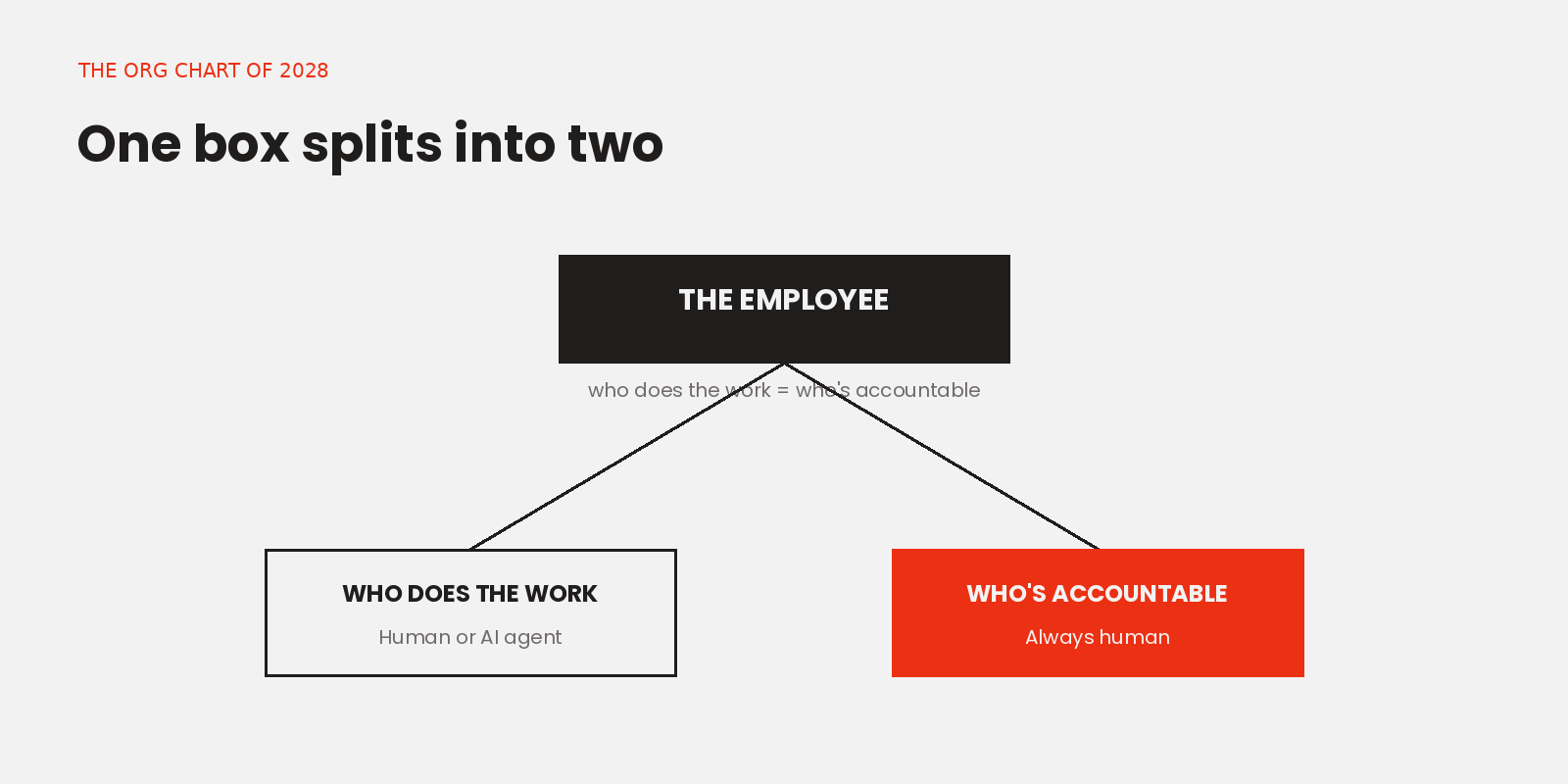
MarkeTeam’s letter is the first formal attempt to ask the professional world to draw it — and it’s asking the wrong platform. LinkedIn was never going to be the answer. The answer is already live, in a handful of directories most executives haven’t heard of yet, quietly building the exact trust infrastructure this letter is asking for. The shift isn’t coming. It’s already here, just not evenly distributed — a handful of early marketplaces, not yet the default reflex, but pointed at exactly the right problem.
Please subscribe to the newsletter and comment in your thoughts!
#AI #FutureOfWork #AgenticAI #LinkedIn #DigitalIdentity #Innovation #Accountability
If you like the